
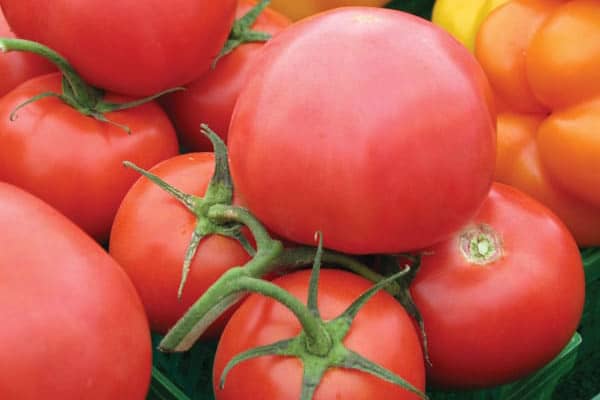
The most perfect part of summer is rapidly approaching. Any day now, we’ll be able to go out to the vegetable garden, pick a sun-warmed, ripe tomato off the vine, and eat it out of hand like a peach or slice it for a sandwich. Ooooooh… I can hardly wait.
How to have a healthy crop of homegrown tomatoes—one of the two things money can’t buy.
Tomato biology and history
The most perfect part of summer is rapidly approaching. Any day now, we’ll be able to go out to the vegetable garden, pick a sun-warmed, ripe tomato off the vine, and eat it out of hand like a peach or slice it for a sandwich. Ooooooh… I can hardly wait.
Time for a little “tomatology.” Although we slice them into salads, stir them into sauces, juice and dice and barbecue and sauté them like vegetables, tomatoes are in fact fruit; think of them as giant berries. A member of the Solanaceae or nightshade family, tomatoes are related to peppers, eggplants, potatoes and tomatillos, as well as ornamental plants such as Japanese lanterns (Physalis), nolana, datura, petunia and nicotiana.
As an interesting aside, some of the most notorious and arguably dangerous plants also come from this family: nicotiana includes the regular tobacco as well as the ornamental, flowering type. Other poisonous species include Atropa belladonna, the deadly nightshade, and datura, a gorgeous ornamental that’s highly poisonous in all its parts.
Tomatoes are native to South America, where there are nine species growing wild in the Andes mountain region of Peru; of these wild species only two have edible fruits—the remainders bear small inedible fruit, a far cry from the fleshy beauties we know today. No one is sure how the tomato made its way to Central America, where it was first found in cultivation, but it was the conquistadores of Spain who first discovered it in cultivation as a food crop in what is now Mexico.
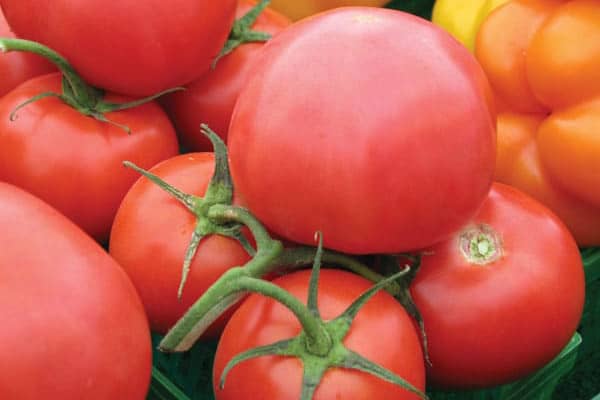
Probably it was these explorers/conquerors who introduced the fruit to Europe in the late 16th century, where it was called pomi d’oro (golden apple) in Italy, and pomme d’amour (love apple) in France. This latter name was attributed to the tomato’s reputation as an aphrodisiac, but not all Europeans eagerly embraced the arrival of this new plant given its relation to poisonous solanaceaous plants. The Germans called the tomato “wolf peach” because in their folklore, members of the Solanaceae family were used to conjure werewolves. The great taxonomist Carl Linnaeus, father of the modern system of botanical classification, drew on this folklore in naming the tomato Lycopersicon esculentum, which translates as “edible wolf peach.” The tomato is now classified as L. lycopersicon, for reasons understood only by botanists and taxonomists.
Transplants or growing your own
Buying transplants at garden centres to grow at home is a perfectly good option, bearing in mind that you’re usually limited in the varieties you can buy—there will be a beefsteak type, a couple of slicing varieties, a paste tomato such as the ubiquitous Roma, and one or two patio types (cherry or grape tomatoes). Growing from seed, on the other hand, gives you a dazzling number of choices. There are literally thousands of cultivars and varieties available, with new tomatoes being hybridized every year. And the heritage or heirloom varieties hold appeal as well. Once you’ve tasted a sun-warm Caspian Pink, a smokey-flavoured Black Krim or the oh-so-sweet Indian Moon, you’ll never look at the standard varieties with quite the same enthusiasm.
If you do grow tomatoes from seed, start them six to eight weeks before the last expected frost date, and even a week or two later is fine. Tomatoes germinate easily but they like a temperature of at least 18° for good germination, so you want a warm—but not hot—location for starting your plants. You can use seeding medium or straight vermiculite to start your seedlings, and just about any container; many people successfully start them in the bottom of a two-litre milk or juice carton, which they’ve punctured to add drainage holes.
One secret to tomato success is to not plant seedlings outdoors too early. Wait till the soil temperature is at least 13°C and the nighttime air temperature is equal or higher.
In an attempt to get tomatoes to grow faster and ripen earlier, some gardeners resort to ingenious methods of holding heat in the soil and around their plants. Red plastic mulch is touted by some as being the way to encourage great growth, and of course mulch warms the soil and reduces weed seedlings. There are also floating row covers and frost protectors—one of the most intriguing, called Wall-O-Water, is a jointed plastic tent made up of tubes that you fill with water, creating an insulating buffer between your plant and ambient cool air. The literature that goes with these frost protectors maintains that you can plant tomatoes and other warm-season crops such as peppers and eggplants into the garden as many as six weeks early in spring.
Determinate, Indeterminate, or Semi?
 What you grow depends on your preference—whether you relish the huge succulent beefsteak varieties, the salad tomatoes such as the grape and cherry varieties, or the varied heirloom and hybrid types for a taste and visual cornucopia. One thing to take into consideration, especially if space is an issue in your garden, is whether a variety is determinate or indeterminate in its growth habit. The determinate or bush types stop growing when buds set fruit, so little or no staking is needed. The plants grow, set fruit and then die, so think of them as having a determinate lifespan. As a rule you’ll harvest fruit for only seven to 10 days.
Indeterminate or vining types keep growing and producing new blossoms even after fruit has set, so harvesting may continue for weeks. Most heritage varieties have an indeterminate growth habit.
Just to confuse the issue, there are also semi-determinate varieties, which will vine like indeterminates but usually grow only three to five feet, rather than to infinity. There aren’t as many semi-determinates available as there are determinates and indeterminates.
Most gardeners agree it’s best if indeterminate varieties are staked, trellised, caged or trained up strings (in a greenhouse setting), rather than being left to lie around in the garden. There’s less loss of crop to disease, it’s easier for the sun to find fruit and harvesting is easier. There are many options available for staking plants, from using twine to tomato cages to fancy trellises, but I’ve grown fond of the tomato spirals, available at some garden centres as well as Lee Valley Tools (www.leevalley.com). These are spiral stakes five to six feet in height; the plant simply grows into the spiral, without needing to be tied. If you prefer simple bamboo or wooden stakes, fasten your plants with cloth strips, pantyhose or with special plant ties made of Velcro stripping.
After planting care
To prune or not to prune indeterminate types? That is the question. There’s debate whether or not to remove suckers, or side shoots, from plants. (Don’t remove suckers from determinate types—you’ll significantly lower your yield.) The suckers of some varieties don’t always produce fruit but may be useful in shading the plant and preventing sunscald in hot locations. Suckers will also have suckers growing in their leaf crotches, making your plants larger, heavier and more cumbersome to work with, and although you may get more fruit, often you’ll have smaller fruit than if you removed suckers and let only a few trusses of blossoms develop into fruit. Either way, removing foliage closest to the ground helps to keep soil off the plant, reducing the risk of disease.
Tomatoes crave warmth and sunlight, so make sure their chosen site provides plenty of light, and preferably some shelter from any prevailing winds. They also love rich, well-drained soil full of organic matter, which of course you’ll provide with generous amounts of well-rotted manure or compost. Compost is the cure for both sandy soils, which drain of water quickly and are nutrient-poor, and clay soils, which are nutrient-rich but very slow to drain or to warm up in spring. We amend our bed with mushroom compost and fertilize with kelp meal and liquid kelp, which provide a range of nutrients at a gentle and consistent strength.
Best Bet Hybrids and Heirlooms
Everyone who grows tomatoes has their favourite variety or varieties. Some prefer the disease resistance and early, heavy fruiting of new hybrids, while others love the look (and taste) of a unique heirloom variety. Maybe you’ll even develop your own hybrid, like the man who invented the ‘Mortgage Lifter’ tomato! Until that time, here are a few interesting ones to try. D indicates determinate type, I is for indeterminate, or those that require staking.
Hybrids & Modern Varieties
Cabot – Developed for our short growing season, and sold exclusively by Veseys in PEI. (D)
Scotia – Well known and very popular open-pollinated type, with a compact growth habit and medium fruit. (D)
Beefsteak – Big, bold and juicy fruit—one slice makes a sandwich. (I)
Golden Girl – For the tomato fancier who likes a different colour; has nice sized, sweet orange-gold fruit. (D)
Roma – VF Popular disease-resistant paste tomato, featuring few seeds and meaty flesh. (D)
Heirloom Varieties
Banana Legs – I had to grow this just for its curious name, but was smitten by the mild flavour of this yellow paste tomato. (I)
Brandywine and Yellow Brandywine Sweet – Large tomatoes with excellent flavour, very popular for more than a century. (I)
Caspian Pink – One of my favourites since I first grew it a few years ago, with a lovely rosy pink colour and sweet flavour. (I)
Hawaiian Pineapple – It doesn’t taste like a pineapple, but its reddish orange colour is delightful and it’s a good cropper. (I)
Indian Moon – Andrea Berry of Hope Seeds and Perennials in Knowlesville, NB, says this is an outstandingly sweet and delicious heirloom variety, with gorgeous fruit that go from green to yellow, then turn bright orange. (I)
Black Krim – Although it’s called black, this tomato is closer to purple in colour, with distinctive dark green shoulders and an equally distinctive, smokey flavour. (I).
An Ounce of Prevention
Tomatoes are inclined to have a variety of diseases, both biotic, which are caused by pathogens such as fungi and bacteria, and abiotic, due to genetic or environmental conditions.
- Common biotic diseases include wilt, caused by one of two fungal pathogens, verticillium or fusarium. Transplants and seed packages often indicate whether a variety is resistant with the designation “VF.”
- Tobacco Mosaic Virus doesn’t tend to be a problem for home tomato growers, but many varieties of tomatoes are now TMV resistant.
- There are several types of fruit rot, including anthracnose, buckeye rot and rhizoctonia rot. These are caused by soil-borne fungi that attack fruit when it’s in contact with soil.
- Leaf spots can be caused by several different fungi and bacteria, often brought on by a spell of wet weather. While they’re unsightly, they don’t usually lead to death of the plant.
- Perhaps the most common disease of tomatoes is blossom end rot. This is an abiotic disease caused by the plant being stressed due to irregular watering. Some experts maintain that it’s also triggered by a lack of calcium in the plant, but this in turn is asa result of irregular or inadequate watering, which doesn’t bring sufficient moisture or nutrients to plants.
- Some heirloom varieties are prone to cracking around the stem end. You’ll see concentric rings of split skin—this tends to heal over quickly unless there are heavy rains. The cracks won’t affect the taste of your tomatoes, they’ll only look a little odd.
- Cat-facing is another case where your tomatoes look funny but the taste isn’t affected. Fruit will have abnormal shapes, which is a result of pollination during cool weather.
What to do? Along with planting disease-resistant varieties, following are good housekeeping guidelines for tip-top tomatoes.
- Use mulch. It creates a physical barrier between your plants and any disease pathogens in the soil. (For indeterminate types, staking is helpful as well.) Mulch also reduces the need for weeding your plants and helps to conserve soil moisture.
- Keep plants watered regularly. When watering, take care not to splash water on the plants’ leaves, which can lead to the spread of diseases.
- Practise crop rotation. Horticulturists generally recommend that you don’t plant tomatoes in the same place for more than two years in a row—repeat planting can encourage the buildup of tomato pathogens in the soil. Also: don’t plant tomatoes close to potatoes, which are prone to some of the samediseases including late blight.
Container Culture
If you haven’t reserved a spot in your garden for tomato plants this year or you don’t have a veggie plot, don’t despair. Tomatoes grow nicely in containers, where it’s easier to control the amount of water and fertilizer they receive, as well as keep a close eye on them for disease problems. Some people prefer to grow tomatoes in containers regardless of how large a garden they have, given they do so well—and chances are this means they’re conveniently located for salads, sandwiches or eating fresh out of hand.
The secret to success with container-grown tomatoes is to give them plenty of sun (at least six hours a day), good soil and an adequately sized container in which to spread their roots—a 14-inch planter, whether made of wood, plastic, terra cotta or resin, should hold only one or two plants.
If you’re using indeterminate varieties, stake plants to keep them from flopping. Liquid kelp fertilizer will provide all the nutrients plants need to get them to fruition. Water them consistently and deeply—first thing in the morning is best—but don’t let the soil sit soggy; make sure your container has adequate drainage (and a saucer underneath it to protect your deck or veranda from water staining.)
Here are notable container candidates:
Window Box Roma – Its compact growth makes it ideal for growing in containers; tasty fruit. (D)
Golden Cherry – An awesomely sweet cherry tomato, perfect for eating right off the plant. Bonus: it boasts a beautiful gold colour. (I)
Ildi – A unique and heavy cropper, with yellow grape-shaped tomatoes, although not as sweet as Golden Cherry. (I)
Sugary –An All-American Selection grape tomato; sweeter than Ildi but red in colour. (I).