

Container planting once brought to mind the image of basic plastic or clay pots stuffed with petunias and begonias. These days the variety of containers and plant combinations is limited only by the gardener’s imagination.
The Basics of Container Planting
Container planting once brought to mind the image of basic plastic or clay pots stuffed with petunias and begonias. These days the variety of containers and plant combinations is limited only by the gardener’s imagination. There are almost no limits to what you can grow in a pot: annual and perennial flowers, small trees, vines or vegetables. For those of us who lack planting space or who want to add a new dimension to the garden, container planting is the answer.
Container plantings can provide drama for a special occasion or hide a landscape flaw. An arrangement of varied pots can create a portable and instant garden. For a change of scene move the containers around, or replace the floral display as the season progresses.
How many plants should you put in your pots? It depends on the size and the type of display you want. Containers can handle a lot of plants as long as there’s enough room for the roots to spread.
Try to envision how you want the final product to look before you begin planting. Then you can enjoy choosing the plants and placing them accordingly. Deadhead blossoms regularly and keep an eye out for insect problems. A quick spray from a hose or a treatment of insecticidal soap is usually enough to control any problems. With the right preparation and maintenance, container gardens can provide months of enjoyment.
Container Selection
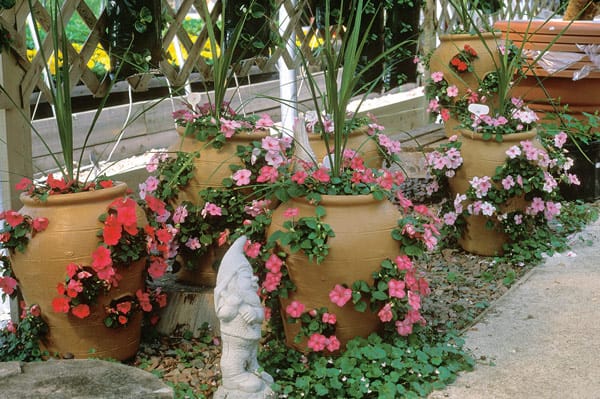
Garden centres now stock a comprehensive and attractive display of plant containers. From glazed ceramic jardinieres to terra cotta receptacles in an array of attractive designs, the choice is enticing. Many gardeners like to experiment and manage to find unusual planters in their own backyards.
I’ve seen floral displays in decrepit wicker furniture, painted tin cans, a bicycle basket, and even an old pair of boots.
Last fall, I rescued an aged bottomless wooden tub that a friend was discarding. With a coat of green paint on its iron rims, it will provide an attractive home for several trailing geraniums, purple salvia, and baby’s breath.
Winter Care
If you have a yen to include perennials, you might have to treat them as annuals to be discarded at the end of the season. However, it’s worth a try to overwinter them. Cover the soil with mulch and group the containers together in a sheltered location. Then wrap them with burlap or a similar material, which allows some air to circulate. Many containers have to be brought indoors to protect them from our unpredictable weather. If you’ve placed your favourite perennials in one of these, try transplanting them to a more durable pot before the onslaught of winter.
Many potted annual plants can be brought inside for the winter, although their growth will be sluggish due to the decrease in light. To avoid bringing in insects as well, give the plants and soil a treatment with insecticidal soap, or change the soil completely.
Edibles
Another fun way to utilize containers is to grow edibles on your patio or balcony. Tomatoes, lettuce, spinach, radishes, cucumbers, pole beans, strawberries, and even smaller carrots can be cultivated this way. A variety of vegetables or seeds suitable for container growth are now available, and most herbs thrive in containers. With the right sized container and the proper growing medium, you can produce your own salad medley. Include trailing nasturtiums, geraniums, or calendulas for colour and for their edible flowers. It’s a special treat to be able to find fresh ingredients for dinner right outside your door.
The Four Fundamentals
Drainage
The first step in having a successful container garden is to prepare the chosen vessel for planting. As important as it is to water potted plants frequently, it’s vital that the water drains properly. Ideally, the pot should have drainage holes so that your plants don’t sit in moisture, and rot. Filling the bottom 10 or so centimetres with gravel, broken pottery, and even bunched plastic can help alleviate this. A layer of mesh or even a piece of discarded nylon placed at the bottom of the pot will prevent the soil from washing out but will allow good drainage.
Soil
Now for the important ingredient: the potting medium. If you buy it from a garden centre, the “soil” is actually a combination of peat moss, vermiculite, or perlite, and organic matter. These materials help retain moisture while still allowing for proper drainage. They’ll also encourage the growth of the plant roots. If you decide to create your own mix, make sure you include some of these ingredients. Soil straight from the garden will usually be too heavy for this purpose. However, if you do decide to use it, sterilize the soil first by heating it in a hot oven. Mix it with peat moss and vermiculite before adding it to your containers.
Water
Regular watering is crucial if your container plants are to thrive. How often you should water depends on many things: the size of the container and number of plants it contains; the type of soil or medium you’ve used, whether the containers are in full sun or shade, and rainfall amounts. You might have to water well several times a week, but just because the surface soil is dry doesn’t mean that the plants need water.
Stick your finger a few inches into the soil to check overall moisture. If the container has holes, you should apply water until you see it running out at the bottom.
Mixing polymer crystals into the potting medium is another way to reduce watering needs. The crystals are non-hazardous and can absorb incredible amounts of water. They then gradually release the water into the potting mix, and keep plants from drying out.
Try to avoid using water straight from the tap. It can contain additives that might adversely affect the plants’ health. Fill a bucket with water and let it sit for a day or use the runoff from a dehumidifier. If you’re planting in unfinished clay pots, first soak them in water for half an hour so they can absorb moisture and not leach it from the plants.
If you’re going to be away for a week or so, water your plants well, place the containers in a shady spot. You can also sit them in a tray of water on stones so they’ll slowly absorb moisture. Take down hanging containers and place them out of direct sun. If you’re away longer, you might have to rely on the kindness of a neighbour or friend.
Fertilizer
Regular fertilizing is another important requirement for container gardens. However, don’t overdo it or you can burn the roots of your plants. Some potting mediums already contain a slow release fertilizer that will last the entire season. Another method involves diluting an all-purpose food. Apply it weekly.