
Take a trip into the East Coast’s prehistory
When people see the word “prehistoric,“ they tend to think of dinosaurs, but the word refers to any period before written history. In the case of humankind, that means over 99 per cent of the time that we’ve existed. Written history in Atlantic Canada began with the arrival of John Cabot in 1497, some 12,000 years after the Indigenous peoples first settled here, so a lot was going on before he arrived. Here are eight prehistoric Indigenous sites where you can broaden your understanding of our region’s history.
Port aux Choix National Historic Site. This is one of the most important prehistoric Indigenous site in Atlantic Canada. In 1967, on a peninsula about halfway up the western side of Newfoundland’s Great Northern Peninsula, workers accidentally unearthed a prehistoric burial ground when excavating the foundations of a movie theatre. Archaeologists discovered that the limestone-based soil of the area had preserved remains that were almost 5,000 years old. Subsequent investigations over the years have revealed that Port aux Choix was occupied by four distinct peoples over a period of 4,400 years.
The modern visitor centre, through multimedia presentations combined with artifacts and murals details the history of the Maritime Archaic Indians, the Groswater Paleoeskimos, the Dorset Paleoeskimos, and the ancestors of the Beothuk people. While the terms Indian and Eskimo are no longer in common use, archaeologists use them to refer to certain groups of prehistoric ancestry that no longer exist.
Visitors will learn that the abundant wildlife in the area included caribou, walrus, and seals, which allowed in some cases for year-round inhabitation by the Maritime Archaic Indians and Dorset Paleoeskimos and in other cases, seasonal visits by the Groswater Paleoeskimos and Beothuk ancestors.
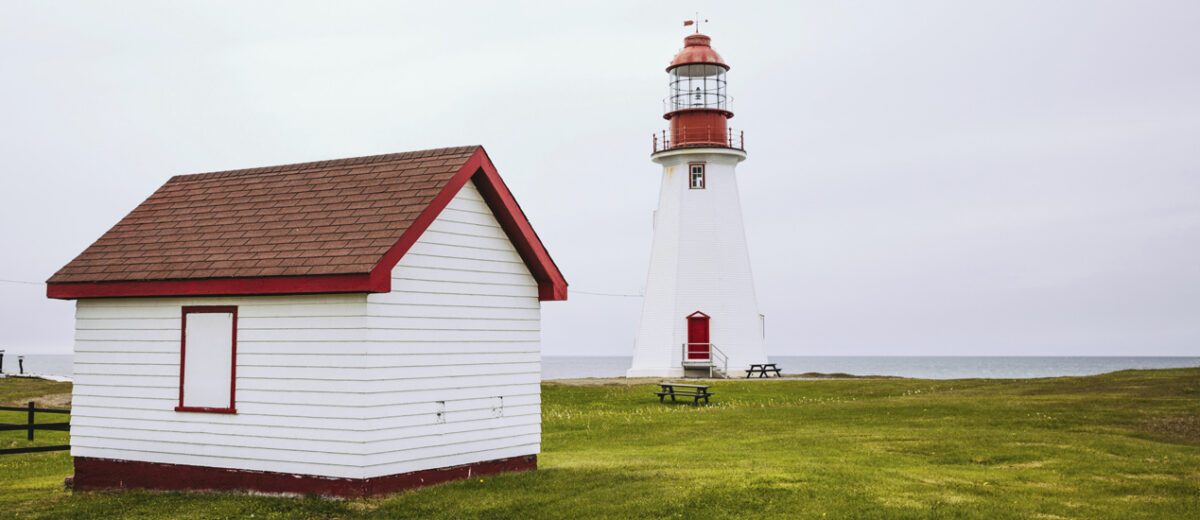
Aside from the visitor centre, there are hiking trails, the photogenic Pointe Riche lighthouse, and a small herd of caribou that live on the peninsula.

L’Anse Amour National Historic Site. This small community is on the south coast of Labrador not far from where the Newfoundland ferry docks at Blanc Sablon, Que. In 1974, a team from Memorial University excavated a small burial mound and found what turned out to be the oldest known grave in North America. It contained the remains of a 12-year-old Maritime Archaic girl who died more than 7,700 years ago. The body was covered in red ochre and surrounded by spearheads, a walrus tusk, and the oldest known toggling harpoon, used to hunt seals.
Realizing that this was a sacred place, the remains were placed back as they were found and the mound restored to its original condition. The items found in the grave are not on display, but you can see reproductions of the artifacts at the Labrador Straits Museum in nearby L’Anse au Loup.
The area also features the tallest lighthouse in Atlantic Canada and the Red Bay UNESCO World Heritage Site.
Fleur de Lys Soapstone Quarries National Historic Site. Fleur de Lys is a small fishing community at the northern tip of the Baie Verte Peninsula on Newfoundland’s north coast. Here, for about a thousand years, beginning around 500 BCE, the Dorset people quarried soapstone that they shaped into bowls and lamps. It is the only known such quarry in North America. The nearby Dorset Soapstone Museum provides the background one needs to appreciate the significance of this place. It’s undergoing a renovation and in July 2026 will reopen with new exhibitions providing a more in-depth look into the lives of the Dorset people who once lived here.
Beothuk Interpretation Centre, Boyd’s Cove, N.L. is about a one-hour drive north from Gander en route to the popular iceberg viewing town of Twillingate. The Beothuks were the Indigenous people of Newfoundland at the time Europeans first arrived. The Boyd’s Cove site was a seasonal village of about 35 people who lived in pit houses. The combination of disease and violence by both Europeans and rival Mi’kmaq led to their extinction in the 19th century.
The centre contains exhibits and artifacts found at Boyd’s Cove and elsewhere. There is also a 1.5-kilometre trail that leads to viewing platforms from where visitors can see the pit houses. On the trail is the “Spirit of the Beothuk” statue by Gerald Squires, a moving tribute to the people colonization destroyed.
Kejimkujik National Historic Site. In mainland Nova Scotia between the South Shore and Annapolis Valley, this is the only national historic site that’s also a national park. Located within the UNESCO Southwest Nova Biosphere Reserve, it was the wintering grounds for the Mi’kmaq for thousands of years. Visitors can paddle the same routes they used to connect to the Atlantic and Bay of Fundy coasts. The area is known for the largest collection of petroglyphs in Atlantic Canada, more than 500 in total. These are sacred places and can only be visited on a guided tour, and it’s worth the effort to book one.
Mi’kmawey Debert Interpretive Trail. A 15-minute drive from Truro, N.S., one finds the trailhead for a 4.4-kilometre hike through an area that once was home to the Paleo-Indian ancestors of the present-day Mi’kmaq. This area of glaciated ridges was the site of several settlements that date back as far as 11,000 years. Interpretive panels explain the significance of the sites on a hike that features many ups and downs through a hardwood and pine forest.
Maliseet Trail. The Maliseet, or the Wolastoqiyik as they often call themselves, are the Indigenous people of New Brunswick’s Saint John/Wolastoq River valley as well as northern Maine. For millennia, they used a 200-kilometre route that linked the river to the Penobscot in Maine, with only 20 kilometres of portages. The trail fell into disuse not long after European contact.
Today, you can still hike a portion of one of these portages. A gradual 1.5-kilometre ascent through a pine and then hardwood forest leads to a junction. One path leads steeply down to the base of Hays Falls, one of the prettiest in the province while the other leads to the top of the falls. It’s a rewarding hike in any season.
Lennox Island. The Mi’kmaq and their ancestors have lived in this remote and scenic area of Prince Edward Island for some 12,000 years. The small Lennox Island Mi’kmaq Cultural Centre has artifacts from the area and on neighbouring islands that attest to their history. Ask for a guided tour and you’ll learn a great deal not only about the Mi’kmaq people, but also the challenge they faced in transitioning from an oral culture to one that spread ideas through the written word. Looking around you will see that they’ve successfully met this challenge.
In addition to the cultural centre, the band offers cultural experiences that can be booked through its website.