Imagine spending a lifetime in one spot. Grounded!
Plants are more than a base for food chains. They enlist the world around them to complete two important functions: mating and seed dispersal.
Pollinators actively transfer transfer male pollen from many flowering plants to corresponding female parts of the same or other plants of the same species. This act of fertilization produces seeds with genetic variations that can help survive changing environments. Seeds form in edible fruits, vegetables, nuts and more. These attract insects, birds, reptiles, and mammals including us, who eat, move, and spread the seeds, often in convenient manure packets.
Allergy-prone people know that wind spreads pollen, too. Nevertheless, plants hedge their reproductive success using attractants including coloured or scented flowers with protein-filled pollens and sweet nectars, irresistible to pollinators.
The birds, bees, and insects
We usually think of bees when speaking of pollination, and they do more than their share. Hummingbirds are tiny gems who also pollinate countless flowers.
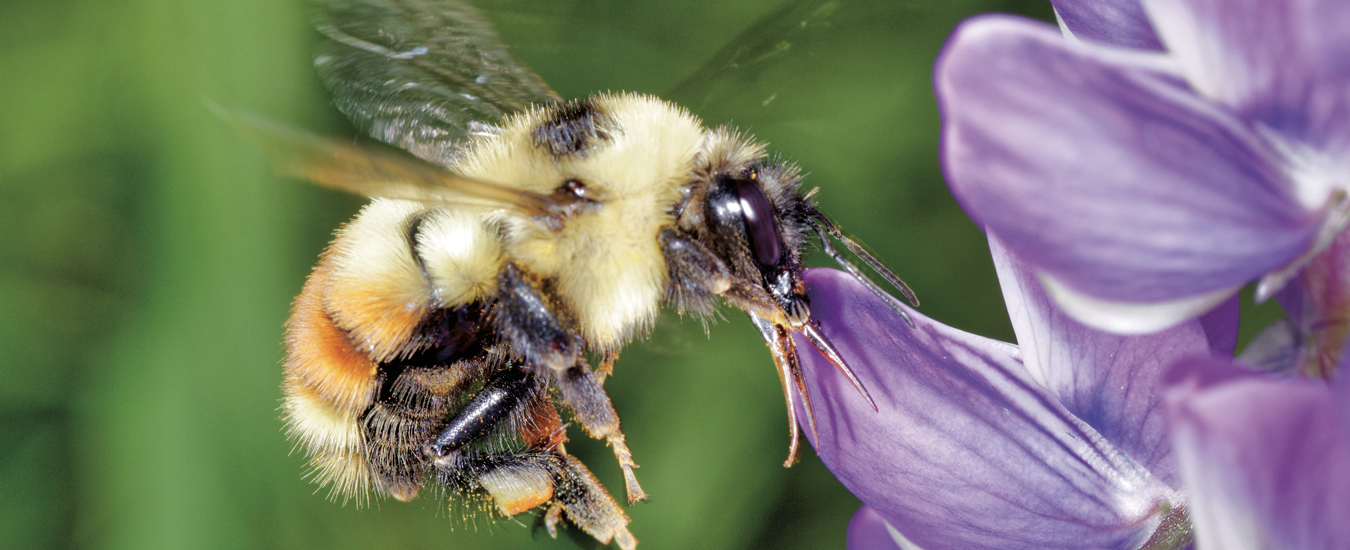
Honey bees (Apis mellifera), introduced from Europe around 400 years ago, are commonly employed by humans to pollinate our crops and make honey for us. However, Canada has almost 800 species of native bees. Bumble bees and mason bees are examples of more effective and efficient pollinators, but they don’t produce and store enormous amounts of honey. Most native species are solitary, each female preparing her own nest and storing food for her eggs.
Among our native bees, bumble bees are more social than most. One year, they adopted a nest box I’d erected for birds. Only the queen survives the winter. In spring, she selects a site, lays eggs, and finds food for herself and her larvae until the first workers mature and help. Males and new queens are produced at season’s end. Come winter, the group breaks up.
Some native bees emerge earlier than honey bees, increasing their importance for pollinating early spring blossoms. Ants do too.
Butterflies, moths, and many flies are also major pollinators.
Many pollinator insect populations are declining. Driving for six hours in Nova Scotia recently on a sunny, warm day, the windshield collected one insect smear. Decades ago, I would have been peering through bug grease. Agricultural and domestic use of pesticides and human-induced losses of habitats are authors of this demise.
Go wild
Well tended lawns are monocultures requiring extensive labour, energy, herbicides, and pesticides. They are also pollinator wastelands. Such lawns are constantly invaded by nature to add resilience with plant diversity. Consider extending “No mow May.” From spring to fall, mow only occasionally. Let some space go wild with native trees, flowering plants, and water, and grow pollinator gardens. Pollinators and plants will thrive.
Common pollinators — know your neighbours
- Ruby-throated hummingbirds, bees, paper wasps, hornets, and yellowjackets sip nectar from flowers, pollinating as they go.
- Hover fly adults have yellow and black stripes that imitate wasps and bees. Like ants, they consume both nectar and pollen. Plus, their larvae eat aphids. Other flies also pollinate.
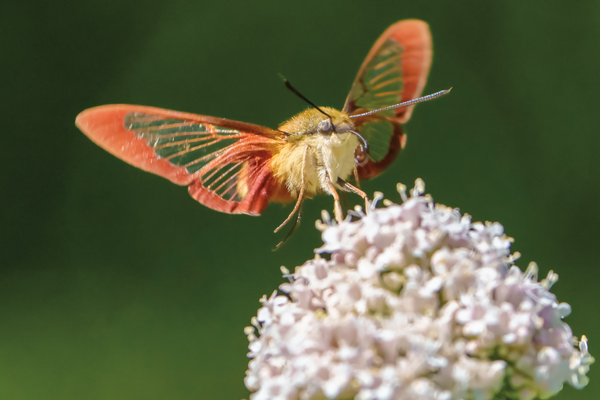
- A hummingbird imitator, the hummingbird clearwing moth can be seen on our lilacs in mid-June and later on a variety of flowers such as native bergamot/bee balm. Other moths pollinate many different plants, too.
- Silvery blues, Canadian tiger swallowtails, and Monarchs (a species at risk) are nectar-feeding butterflies. There are many others.
Without such pollinators, greenhouse workers patiently use tools like cotton swabs and soft brushes.
Grow it and they will come
Over 50 years at our place, we have established diverse, flowering, native perennial plants and trees that offer pollen, and in many cases nectar, from early spring through autumn. The following are roughly in order of blooming.
- Trees include willow, poplar, ash, cherries, oaks, red and sugar maples, birches, serviceberry.
- Shrubs include dogwood, hazelnut, wild raisin, hawthorn, high-bush cranberry.
- Bunchberry, a forest floor plant, blooms mainly in June, then sporadically until autumn.
- Milkweeds provide essential food for Monarch butterfly adults and caterpillars — plant lots!
- Bergamot, coneflowers, and mints are always winners, and make good tea.
- Native roses are good, but note that some hybrids have little or no nectar.
- Asters, including yarrow, are welcome fall bloomers. As is Joe-Pye Weed.
- Goldenrods are pollinator magnets, and non-allergenic as their pollen isn’t airborne.
- Native witch-hazel blooms in autumn with spidery and fragrant yellow flowers.
Other native plants we may add in the future include blue vervain, pearly everlasting and New York ironweed. What does your garden grow for pollinators?