
Last summer at the Mabou Farmers Market, I came upon a piece of functional art that stopped me in my tracks: a burl bowl crafted by Cape Breton artist Andrew Tubman. I’ve long been drawn to objects that balance beauty and utility, art that lives in our hands and homes as much as in our eyes.
The bowl’s origin is as compelling as its form. Tubman says the burl was collected from a friend’s farm in Lake Ainslie, during the clearing of old fields. It is a spruce burl, a species prone to these wild, bulbous growths.
In this piece, the outer edge carries the delicate tracks of ants, while the inner grain bears evidence of worms, reminders that time, insects, and even disease have a hand in shaping wood as much as sun and soil.
“My pieces are made to reflect what nature has created, keeping the organic shapes, embracing characteristics and leaving the effects of insects, time, and disease,” says Tubman.
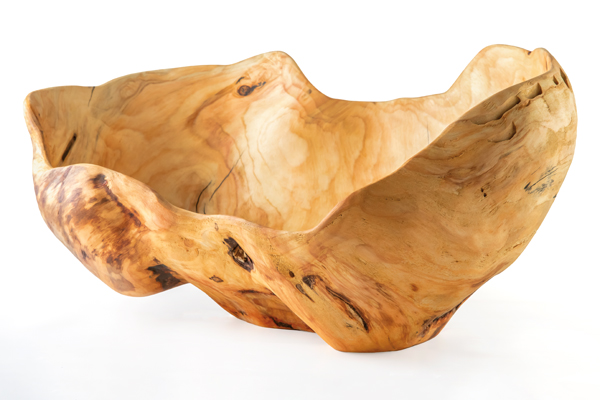
Rather than sanding away the story, he reveals it. Each bowl is one of a kind, impossible to recreate, and perhaps that’s why they resonate so deeply.
I purchased this bowl and gifted it to my husband on our wedding anniversary. Like life, and like marriage, it carries imperfections and unexpected curves that shape its character.
The marks left by time do not diminish its strength; they deepen its story. In its broad, generous form, I see resilience, and in its hollow, space to hold memory, love, and the unfolding of years together. Something to be treasured.
When I hold this bowl, I see more than a vessel. I see Cape Breton’s forests, the unseen labour of insects, and the artist’s sensitive hand. Functional, yes — but also a living reminder that beauty is found not in perfection, but in what endures.