As a three-decade auto industry veteran and experienced rally-car pilot, Nova Scotian John Paynter logged thousands of kilometres on winter roads. He’s seen a lot of the East Coast’s infamous snow, ice, and slush, and understands how it can daunt newcomers and first-time drivers.
As with most things, respect and experience are key. Whether you’re driving for the first time, or have recently moved here from elsewhere, he recommends you take time to learn about these new conditions.
“I told my own kids their first time in snow to go find a place that’s safe, like a big empty parking lot, and mess around a little and see what it’s like, how it affects turning and handling, what a skid is like,” he says. “Many new drivers have their first slide in the snow, and they panic. That’s one of the biggest things that gets them into trouble.”
The basic driving skills don’t change, but your vehicle will respond differently, explains Eric Brookins, general manager of Safe Drivers PEI, a driving school operating throughout the province.
“Winter driving is a tricky thing,” Brookins says. “It takes more care and attention … Driving skills, the fundamental laws of physics, are the same. Traction is the main difference. You don’t want to be going into situations quickly. Time is your best friend. We train that regardless. Give yourself time. Do not rush into situations. Get into the habit of being prudent, then winter driving is not that difference. People get too comfortable with their summer driving, taking corners fast, braking later. Do that when traction is reduced, and you find yourself in a predicament.”
And ample driving experience counts for little if it doesn’t include winter travel.
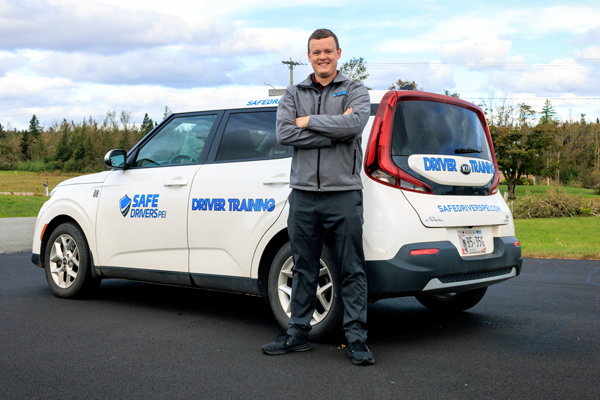
“We see it with newcomers who have 10 to 15 years of experience but are not used to snow,” Brookins says. “The car isn’t going to stop in the same way you’re used to. You need to do things five to 10 seconds sooner. A lot of them don’t realize how bad our winters can get. A blizzard or snowstorm may be something that they haven’t seen. They picture light snowflakes, not the 80-kilometre-per-hour drifting snow … You need to recognize what you don’t know. Overconfidence is when you get into trouble.”
Safety features abound in today’s cars, but they complement skill and patience, they don’t replace them.
“Many of our vehicles now have all those bells and whistles,” Brookins says. “These systems are not there to be your primary resource, they’re there as a crutch, or an added layer. By the time that collision-assist warning kicks in, you are very late to the party. It’s the last thing you have become you get into a collision. To rely on that isn’t going to be a good idea.”
Four-wheel-drives are another spark for driver-imperilling overconfidence.
“Look and see what’s off the road ... in the winter and it’s normally four-wheel-drive guys who have too much confidence in the vehicle and their skills,” Paynter says. “And I’m a bit guilty myself, a couple times been too confident, and almost got into trouble. I needed rally experience to avoid it and most drivers don’t have that experience.”
It all comes back to physics. Vehicle dynamic control is a much-loved new feature that makes it near impossible for a driver to spin their tires, helping them correct skids with deceptive ease.
“It can take a bad driver and make them better, but if you have overconfidence in that, you can get in trouble,” Paynter explains. “All that’s touching the road is an area about the size of the palm of your hand on each tire. So even with the best safety equipment can’t compensate for the lack of traction of rubber meeting the road in some cases. If you get into slush, you don’t have the grip between you and the road, if you’re going too fast, you’ll still lose control.”
Both experts agree, those humble, unglamorous tires are critical, whether you have decades of experience or are a total newbie.
All-season tires are a tempting way to save money, but they’re just not right for East Coast winters.
“You don’t have to get the most expensive ones,” Paynter says. “You just need a good tire that works for the ice and snow. Michelin was one of the first with a new all-season. Still a bit of a compromise over a good snow tire, but if you don’t need to be out in the snow all the time it works good, does about 90 per cent of what you need.”
Brookins agrees. “Don’t underestimate the power of winter tires,” he says. “People largely don’t understand why we put winter tires on, or what the benefit is. All-seasons have softness in their range to maintain traction, but in -20, the rubber gets hard. At that point you’re driving on four hockey pucks. Winter tires stay softer at lower temperature. If you don’t use winter tires, you’re asking for trouble. They’re incredibly expensive, but if you avoid one fender bender, that investment is worth it.”
Also be certain your car is in safe operating condition. Many crashes happen when a vehicle unexpectedly breaks down at speed. With reduced reaction times in winter, that risk goes up.
“No matter what your sticker says, get a safety inspection before every winter,” advises Paynter. “A car is a consumable item, so it’s going to need regular work. Get it checked just to be sure. Find a shop you can really trust. Talk to people. You’ll find the best ones by word of mouth.”
And a final tip from Brookins, echoing the words of driving instructors ever since the first horseless carriage rolled off the lot: “As a driver, you need to make sure you’re driving properly for the conditions. It’s always basics like controlling speed, making shoulder checks, braking in due time.”