
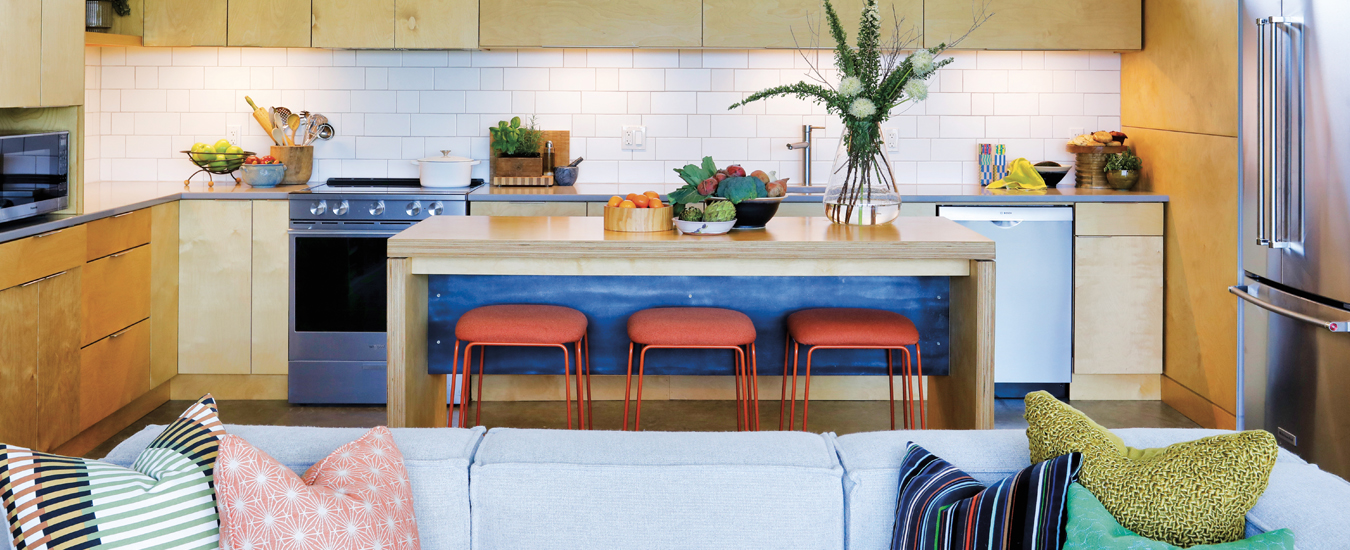
As summer softens into fall along Nova Scotia’s South Shore, the landscape at Rose Bay puts on its most subtle but exquisite shows. The summer colour shifts from variants of green to crimson and gold and the ocean begins to reflect cooler skies over nearby beaches. The light in the salt marsh where a new cottage nestles close to the delicate ecosystem grows shorter every day but will linger long enough to remind Suzanne Saul and her husband Chris Joyce why they chose this special spot.
For Suzanne and Chris, this seasonal transition is more than just scenery, it’s the rhythm their new dwelling they call Salt Marsh Cottage was designed to embrace. Tucked into a hectare along Kingsburg Road, the couple’s long, low-slung retreat doesn’t just sit quietly on the land. It listens to it.
And while many cottages on the East Coast are summer sanctuaries, Salt Marsh Cottage was always meant to be more. The couple wanted a year-round escape. After 30 years owning and operating Attica, a busy design and furniture business in Halifax, they were looking for a sanctuary where they could put their design ethos to work.
“Suzanne and I are urbanites, not really the outdoorsy type,” says Chris, recalling the pandemic and the uncertainty about when, if ever, it’d be safe to travel again. “We wanted our own oasis.”
Months of design conversations followed, sketches traded back and forth with a commitment to create something unpretentious and anchored in the land. “We called it Salt Marsh Cottage,” Suzanne says. “We knew we were building beside something delicate, a salt marsh with its own ecosystem. We wanted to honour that.”
That included refraining from disruptive landscaping and designing a home that’s calm, open, and careful with the view. They envisioned a modest structure blending with the landscape rather than overtaking it. Chris reflects that the understated elegance of Danish and Japanese architecture influenced them, plus their love for mid-century modern design. Everything came back to one principle: quiet simplicity.
“We wanted it to feel like it had always belonged here,” Suzanne explains, adding her admiration of existing architecture, showing the influence of notable East Coast architects like Brian MacKay-Lyons, drew them to the area.
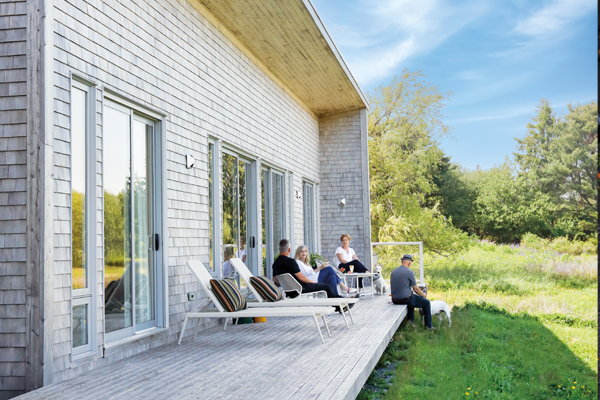
The cottage stretches along the land. Windows on the roadside were placed higher for privacy from the road that Suzanne says is surprisingly busy. Cedar cladding, left to age naturally, has already begun its transformation to a soft silver-grey, letting the building recede gently into the salt marsh grasses. The 1,700-square-foot home follows a long, rectangular footprint, a deliberate choice to give every room a view of Rose Bay.
“That was really important to us. We were very egalitarian about their views,” Suzanne says.
The layout includes two bedrooms, a studio space for painting and creative work, and an open-concept living, kitchen, and dining area — all directing the eye outward.
Materially, the palette is spare but rich in warmth: Baltic birch cabinetry, concrete floors, white walls, and accents of steel. “We limited the materials on purpose,” Suzanne explains. “Wood, concrete, steel, white — that’s it.”
Chris, a meticulous woodworker, built much of the cabinetry himself. He’s especially proud of the fine joinery where materials meet — steel into wood, flush baseboards, recessed cabinetry. Those subtle details help the space feel seamless and grounded. “It takes a lot of refinement to make something feel simple,” he says. “And we didn’t want clutter. At home, we have more stuff. I collect trinkets and objects. But here, we needed restraint.”
Even the furnishings echo that intention. Earth-toned fabrics, natural textures, and a rotating collection of artwork, much of it their own, offer quiet character without overwhelming the space. “We made sure we had walls for art,” Suzanne laughs. “So many beautiful homes don’t leave room for it but for us, that sense of hand, of personal expression, is part of what makes a space feel alive.”
Outdoors, the work continues. Landscaping remains gradual, shaped by the contours of the land rather than a design imposed upon it.
Though the cottage is occasionally rented, the couple spend as much time as they can throughout the year. Alone, with friends, family, and their dogs, they enjoy walks on Sand Dollar and Hirtle’s Beach, or catching the LaHave ferry across the river. “It’s a great jumping off spot to other communities,” says Suzanne, who adds that they are only an hour and a half from the city.
“It’s not a summer place,” Chris says. “It’s an all-seasons place. We do a lot of work for clients who close up their cottages after the summer. This is our philosophical country dwelling. It’s not meant just for summer but all year round.”
Sharing your space
Suzanne Saul and Chris Joyce occasionally rent their Rose Bay retreat. They offer expert advice on designing a cottage that’s both personally meaningful and effortlessly guest-ready for rentals.
Depersonalize but don’t strip the soul. Remove personal belongings like clothing so guests don’t feel like they’re intruding but leave personality and warmth. Avoid creating a sterile, box-like environment.
Include handmade and local art. “Chris and I believe that no space is complete unless there are handmade items in them,” Suzanne says. Use original artwork and handmade pieces, especially from local artisans, to give a sense of place. Mass-produced décor is less meaningful; authenticity makes the experience unique, especially in culturally rich locations like Nova Scotia. “We have a lot of our own art on display,” she adds.
Create opportunities for connection and leisure. “We have a guest book and a photo of Chris and I to make the personal connection,” Suzanne says, adding the space has a collection of art books, games, and music. “We have a big collection of albums that you can browse through and enjoy on rainy days.”
These touches make the space feel thoughtful and inviting.
Prioritize sleep quality. Use good mattresses and ensure all bedding is high-quality and professionally styled. “We follow Airbnb best practices such as triple sheeting (white sheet, duvet, and top sheet),” Suzanne says. White bedding is preferred because it shows cleanliness.
Complement the setting. “In our cottage bedrooms, we use lined linen drapes to help darken the room but maintains a light, airy cottage feel while still offering some privacy and light control,” says Suzanne. “It’s nice to wake up to a Rose Bay sunrise.” Showcase the natural beauty of the setting — don’t shut it out.
Choose durable, easy-to-clean fabrics. “While not always using branded performance fabrics, we opted opt for well-wearing, easy-to-clean upholstery,” Suzanne says. Durability matters, especially with pets or children, but aesthetic and comfort are equally important.
Offer practical and comfortable sleeping options. Use convertible furniture like pull-out beds for extra sleeping space. Ease of use is key. Guests shouldn’t struggle with setup.
Allow full guest access, but consider storage. “We don’t have locked or a separate owners’ space at the moment,” Suzanne says. “When you offer an elevated space, people are very respectable … We want our guests to have the same special experience that we have.”