

As the days get shorter and darker, gardeners find relief by decorating their homes with festive holiday plants and greenery arrangements. From picking décor from your garden to keeping live houseplants through the season, embrace your holiday green thumb.
The outdoors comes in
Although we don’t generally recommend doing too much garden cleanup in autumn, to protect overwintering habitat for wildlife and pollinators, it’s perfectly fine to harvest a few stems of seedheads, or branches with berries or evergreen foliage, to use in your décor. Among the items to prune from are:
Holly branches, preferably with berries, of course. These evergreen, prickly-foliaged boughs with their brilliant scarlet berries are a classic favourite for holiday décor.
Evergreen boughs such as pine, balsam fir, cedar and juniper. A few judicious prunings of boughs will make your trees and shrubs look tidier and help to create wreaths and swags for the holidays.
Cones from evergreens. All evergreens have cones, which come in a variety of shapes and sizes, depending on the species. Among the most striking are pine cones of various types, and the long, dramatic cones of Norway spruce. These can be used as accents in wreaths, swags, candleholder décor, as well as crafted into striking ornaments for your tree.
Willow twigs. Certain types of willow trees have dramatic branches which look great in container arrangements. Curly willow has, as the name suggests, wavy and curled branches. Fantail willow is known for its flattened, curved and dramatic branches. If you don’t have your own or they are too small to prune, bundles of willow and other twigs (such as eucalyptus) can also be purchased from nurseries and other stores carrying holiday décor.
Rosehips. The wild multiflora rose is a nuisance plant in many habitats, but its hips are small, red and hard fruits that look great in arrangements. Other types of roses have hips, but they may be softer and not suited for decorations or have been consumed already by wildlife.
Seedheads of perennials. I leave my perennial seedheads, such as coneflowers, rudbeckias and teasels, standing both for winter interest in the garden but also to add a few stems to container arrangements.
Dried hydrangea blooms. We discussed the joys of hydrangeas in your garden in July/August 2025’s garden column, but here’s an added bonus: the flowers of many types dry beautifully, and are gorgeous on a Christmas tree, in wreaths and other accents.
A white birch tree. Probably 25 years ago, I first cut a small white birch (about 1.3 metres tall) on our property, arranged it in an old milk can swathed in burlap, and hung clear ornaments and pink lights on it as a second tree in our home. I still have the box of ornaments and lights and get a friend to cut a nice branch off a tree on their property, but you can also buy artificial birch-like trees that can be used year after year and look just as great.
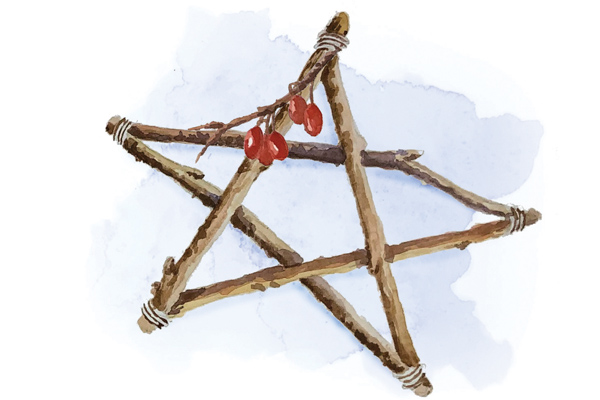
Twig stars. These are so easy to make and lend a real homespun effect to your décor, both indoors and out. Simply glue, nail or lash five similarly sized twigs together to form a star. Garnish with evergreen twigs or ribbon, or leave them bare. They will last for years, too.
Elegant amaryllis
There’s frost on the pumpkins and the Halloween décor isn’t even put away before amaryllis bulbs go on sale at department stores, grocers, and specialty garden centres (or by mail order). These squash-sized bulbs produce dramatic stalks of large, trumpet shaped flowers in shades of red, rose, orange and bicolours. Amaryllis have gone up dramatically in price in the past few years, so you may want to keep yours and get it to bloom the following year.
Once the flowers are spent, the bulb sends up long, straplike leaves. Don’t cut these off: let the plant grow all winter and into spring, as it’s making food for new flower growth the following season, just as our outdoor spring bulbs do. After the risk of frost is past, you can place your amaryllis outside for the summer if you wish.
In late summer, bring your bulb inside, place it in a cool, dark location and stop watering it. This forces the plant into dormancy, which it needs to do before it will bloom again. A cool, dark basement works well, but don’t store the bulb near fruit, which releases ethylene gas that kills flower embryos. When the leaves have turned yellow you can cut them off, but continue to leave the bulb in the dark for between eight-12 weeks (longer for the largest bulbs). At the end of that period, bring the bulb back up from the dark, repot in fresh potting medium, water it well and put it in a bright spot. It will soon start to show signs of growth, and within four to six weeks you should see the first shoot of new flowers emerge.
Know your holiday cactus
We all know about Christmas cactus, those unique plants with the flat, segmented leaves and the colourful flowers in red, orange, pink, or white. But did you know there are also Thanksgiving and Easter cacti? How to tell them apart?
Thanksgiving cacti tend to bloom from late October until late in December. Their flowers face outwards from the cascading stems. Christmas cactus, the most common and popular plant, can bloom from late November until well into winter, and are easily recognized by those drooping, colourful flowers. Easter cactus is a different genus, even though the plants look quite similar, and their flowers are starrier in form, blooming from after Christmas until well into spring. Often, they aren’t offered for sale until late winter.
All three types of holiday cactus require similar care. They do fine in average home conditions, with well-draining potting mixture and medium to bright light. Water when the potting mixture is dry to the touch, and don’t leave the pot standing in water. Fertilize during active growth periods with a good all-purpose plant food at half strength. Pests or diseases seldom bother them, although root rot can be an issue if they get waterlogged.
Want your plants to rebloom year after year? Many people put their holiday cactus outdoors for the summer, bringing them in as temperatures cool, before the risk of frost. The length of the day triggers flowering. As days shorten, they will begin to form buds, and bloom according to which type they are.
Ask the expert
Q: Is it necessary to set houseplants on a tray of pebbles to help raise humidity around the plants?
A: This is one of those questions where you’ll find spirited discussion for and against the use of pebble trays. I don’t use them, because I have some 300 plants in my house, which would mean a lot of pebbles. Grouping plants together helps raise humidity a bit. If you’re concerned that your house is too dry for your plants especially in winter, invest in a small humidifier to use near your collection.
Do you have a gardening question? Let us know, and Jodi may have your answer in a future column.